01
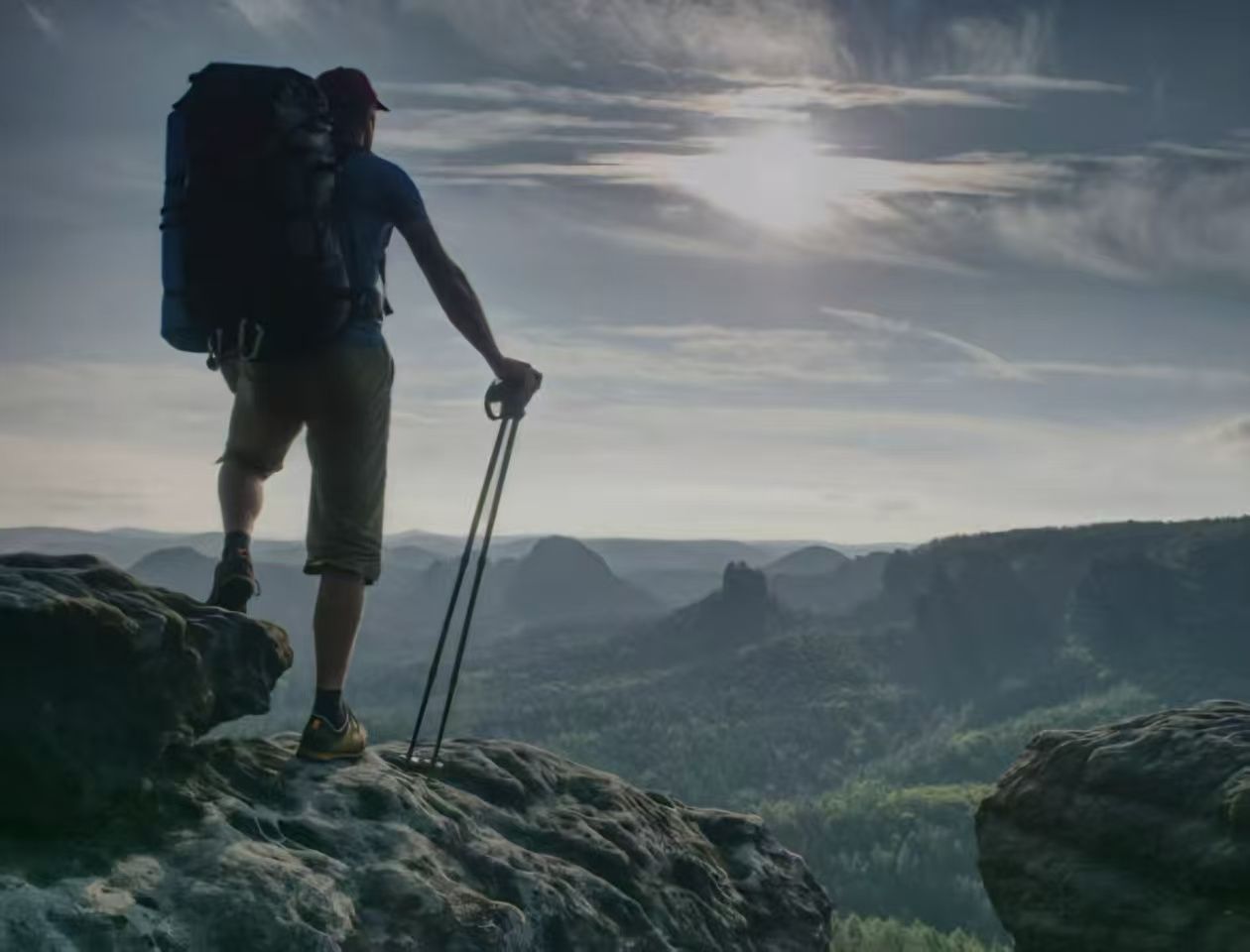
Correct posture
An upright, aligned body with a slight forward lean — the foundation every other part of the technique builds on.
Nordic Walking
Natural walking, powered by specially designed poles. Taught to the international standard of the International Nordic Walking Federation (INWA).
What is Nordic Walking?
Nordic Walking keeps your natural walking gait and adds the active use of specially designed poles with a strap system. The poles are planted diagonally behind the body to drive you forward, so the arms, shoulders and core work with every stride.
The technique comes from classical cross-country skiing: the pole is placed behind the body during loading, the grip is controlled, and the strap lets the hand open naturally while force still transfers through the pole.
INWA instructors teach it with the INWA 10 Step Method™ — a progression that takes beginners from first steps to confident, efficient technique.
01
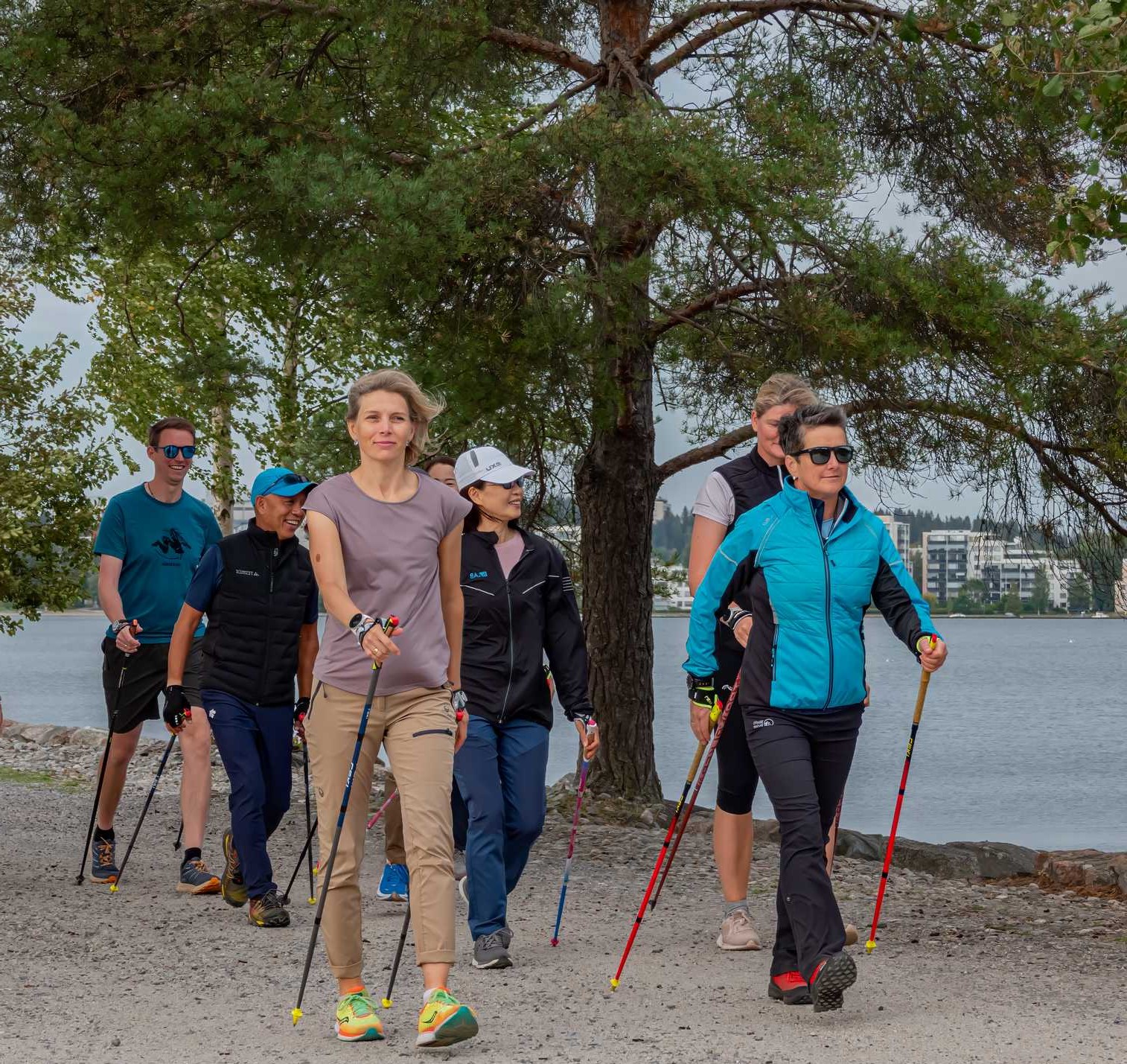
An upright, aligned body with a slight forward lean — the foundation every other part of the technique builds on.
02
A natural heel-to-toe stride with opposite arm and leg moving together, just as in ordinary walking.
03
Poles angled backwards, an active push through the strap, and a relaxed open hand at the end of each arm swing.
Health benefits
Up to 90%
of your muscles in use, compared with around 50% in regular walking.
20–46%
more calories burned than regular walking, thanks to upper-body activation.
≈ Jogging
a heart-health effect similar to light jogging, with far less impact.
Figures as published by INWA.
Supports biomechanically correct movement and alignment.
Works the upper body, lower body and core together.
Encourages even, symmetrical muscle use on both sides.
Large and small muscle groups lift cardiovascular conditioning.
Improves blood flow and energy use through the whole body.
Alternating effort and relaxation helps release tight muscles.
Who it's for
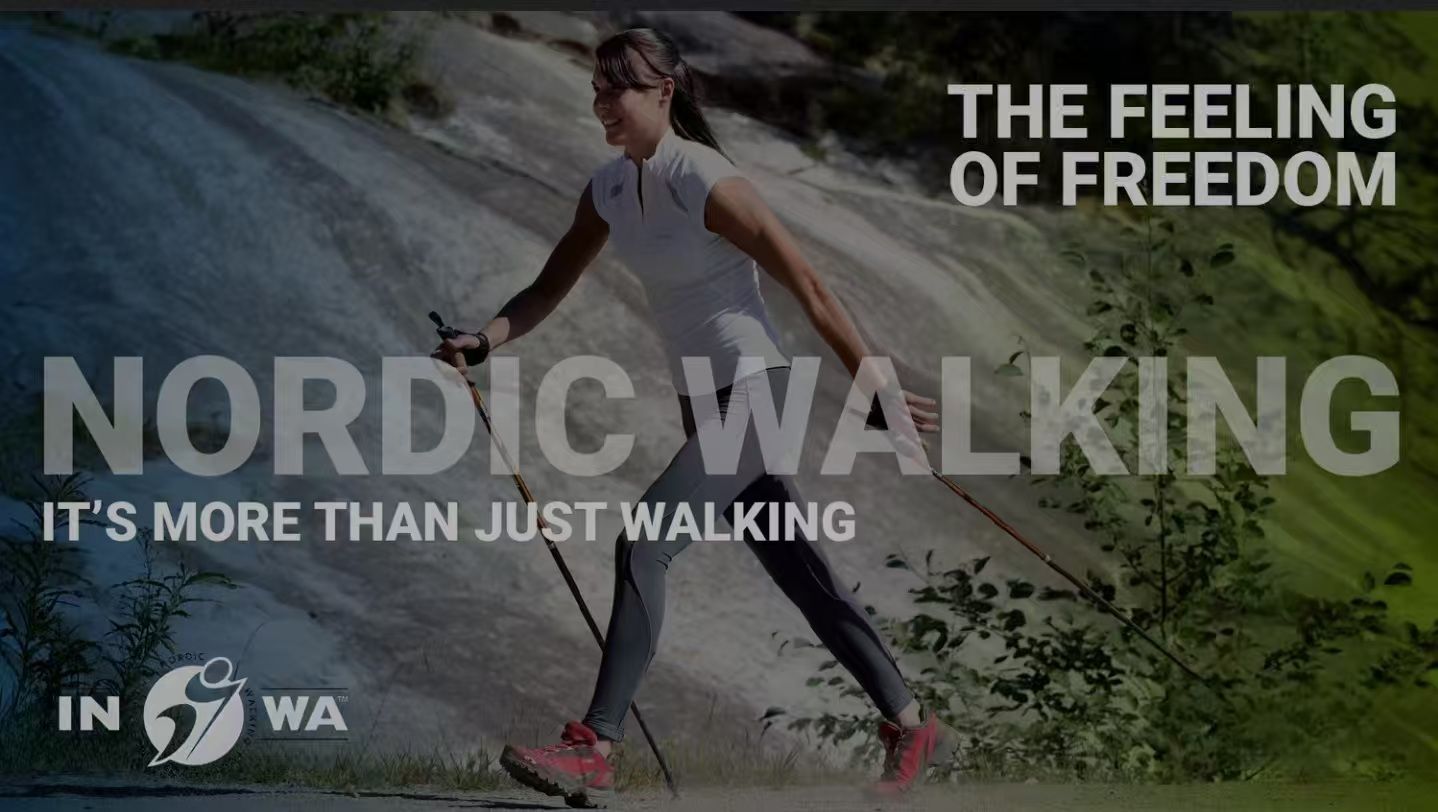
A safe, low-impact way to stay active — from rehabilitation and active ageing to everyday fitness.
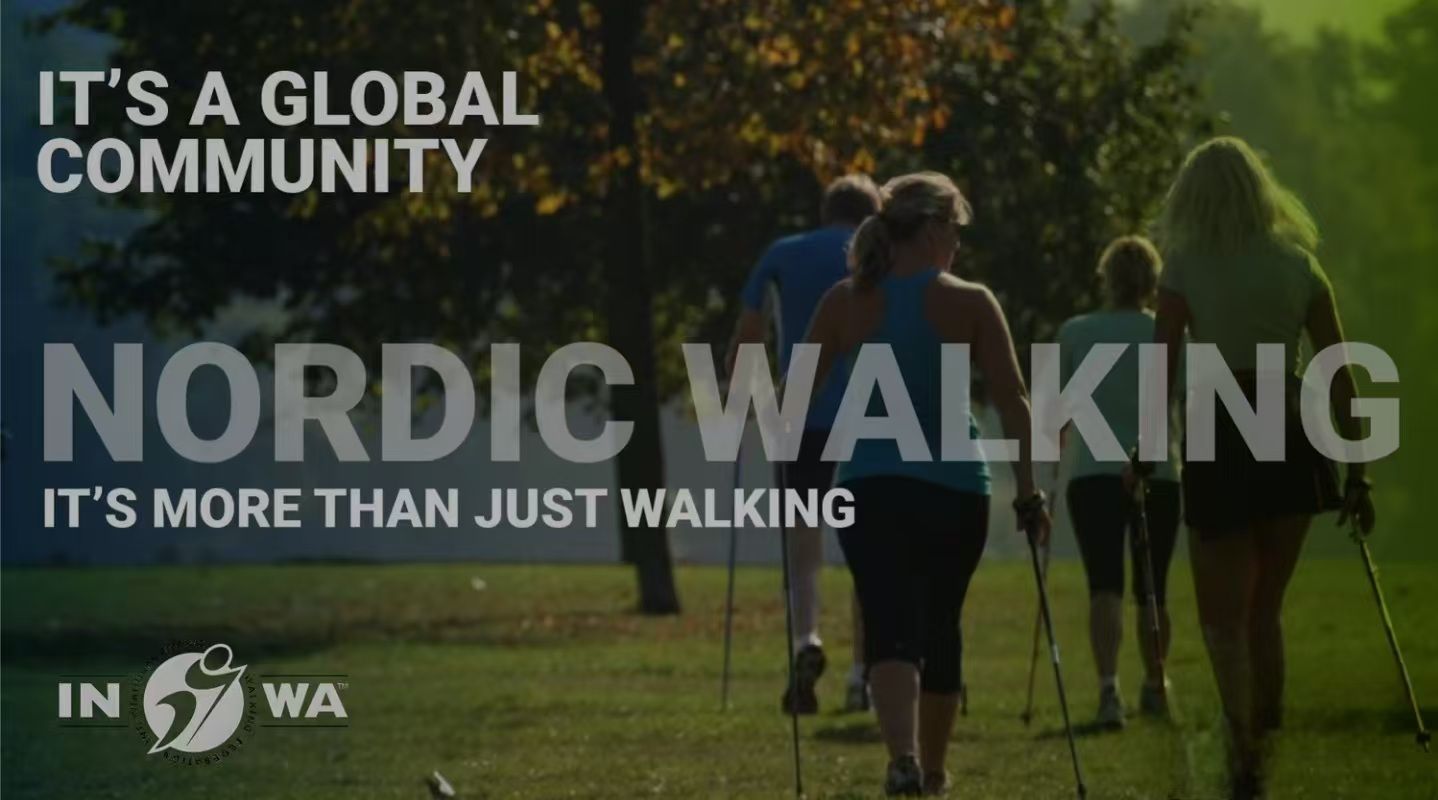
Group walks in parks and park connectors — exercise, fresh air and community in one.
INWA races cover 5 km, 10 km, longer distances and relays, up to the World Cup and World Championships.
INWA's youth programme adapts the technique through games that build coordination and confidence.
Certified instructors
INWA instructors are certified in more than 40 countries. Courses combine face-to-face training with online theory through the INWA Academy. In Singapore, our MOU with Republic Polytechnic's School of Sports and Health will bring the full range of INWA courses to local candidates.
Step 1
Experienced Nordic Walkers trained to lead group walks safely and support instructors locally.
Step 2
INWA's flagship course, built on the 10 Step Method™. Instructors teach technique and run groups for health, fitness, tourism or social activity.
Step 3
Teacher trainers who certify new Instructors and build the national instructor network.
Specialist courses include Nordic Walking for Children & Teens and Race Official training.
Research
Nordic Walking has been studied in clinical and community settings around the world. A selection of the peer-reviewed research cited by INWA:
History
1930s
Finnish cross-country skiers walk with poles for summer training.
1966
PE teacher Leena Jääskeläinen promotes pole walking for everyone.
1997
"Nordic Walking" is named; the first dedicated poles and instructor courses launch.
2000
INWA is founded in Finland by Aki Karihtala.
2010
Active in 40+ countries; the first World Nordic Walking Day.
2016–19
INWA expands into China and launches the World Cup.
2024
300+ athletes race in Lahti; the youth programme and INWA Academy launch.